
MIROS Tests Advisory Minimum Highway Speeds To Reduce Lane Hogging And Improve Traffic Flow

MIROS Tests Advisory Minimum Highway Speeds On Selected Expressways To Improve Lane Discipline
Malaysia is taking a new approach to tackling one of the biggest frustrations faced by highway users, lane hogging.
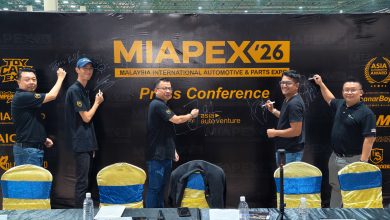
The Malaysian Institute of Road Safety Research (MIROS), together with the Malaysian Highway Authority (LLM), PLUS Malaysia Berhad and South Klang Valley Expressway (SKVE), has officially launched a three-month Proof of Concept (POC) trial introducing advisory minimum speeds on selected highway stretches nationwide.
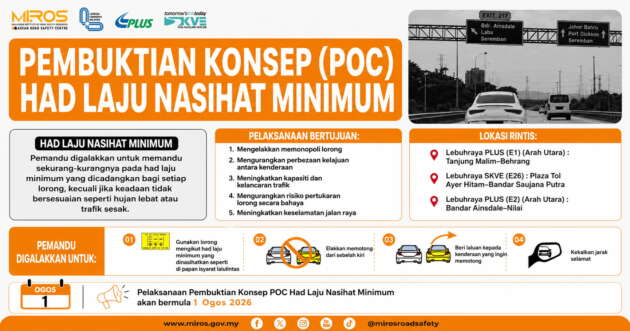
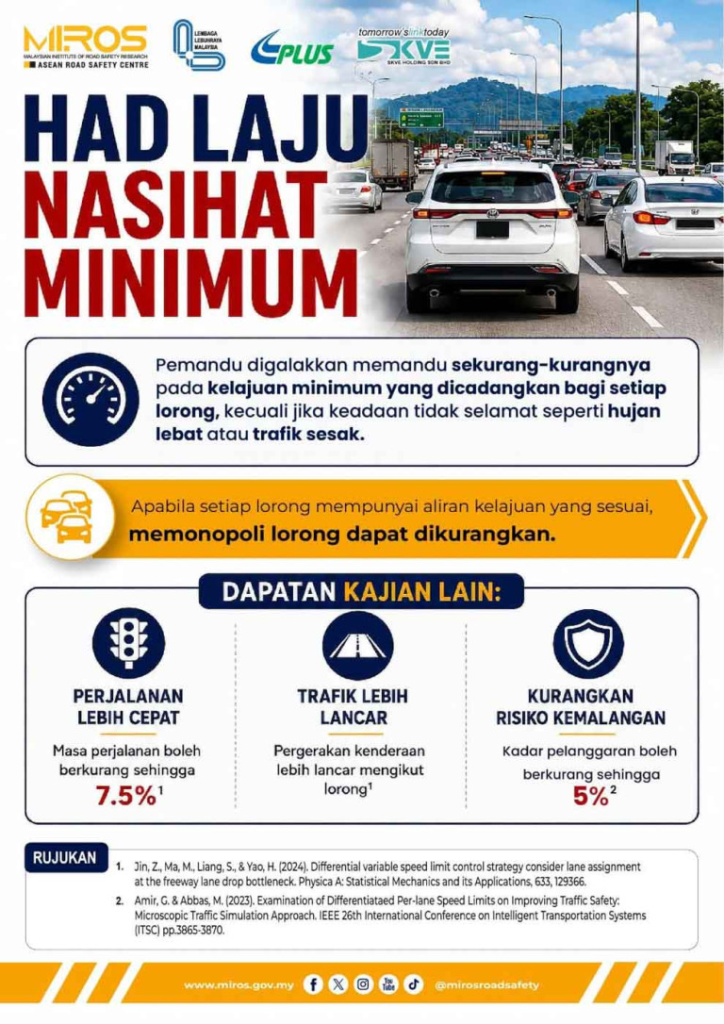
The initiative, which runs from 1 August until 31 October 2026, is designed to encourage motorists to choose lanes according to their travelling speed, helping improve traffic flow while reducing unnecessary congestion and unsafe overtaking manoeuvres.
Unlike a new speed limit regulation, the advisory minimum speeds are not legally enforceable. Instead, they serve as guidance to help motorists use highway lanes more appropriately.
Why Is MIROS Introducing Advisory Minimum Speeds?
Many highway traffic jams are not caused by accidents or roadworks but by inconsistent traffic flow.
One common cause is lane hogging, where slower vehicles remain in the overtaking lane, forcing faster-moving traffic to brake or change lanes unexpectedly. These repeated braking actions create a chain reaction that eventually develops into what traffic experts refer to as phantom traffic jams.
By encouraging drivers to match their travelling speed with the correct lane, MIROS hopes to create smoother traffic movement while reducing unnecessary lane changes and improving overall road safety.
The trial also aims to:
- Reduce lane hogging.
- Improve highway traffic flow.
- Minimise speed differences between vehicles.
- Reduce risky lane-changing behaviour.
- Enhance overall road safety.
Where Is The Trial Being Conducted?
The advisory minimum speed trial is currently being carried out at three selected highway sections:
PLUS North-South Expressway (E1)
KM400.1 – KM388.0 (Northbound)
Tanjung Malim → Behrang
PLUS North-South Expressway (E2)
KM267.8 – KM278.8 (Northbound)
Bandar Ainsdale → Nilai
South Klang Valley Expressway (SKVE E26)
KM9.6 – KM16.7
Ayer Hitam Toll Plaza → Bandar Saujana Putra
These locations were selected because they frequently experience congestion caused by traffic behaviour rather than physical bottlenecks, making them suitable for evaluating the effectiveness of the advisory system.
Recommended Minimum Speeds For Each Lane
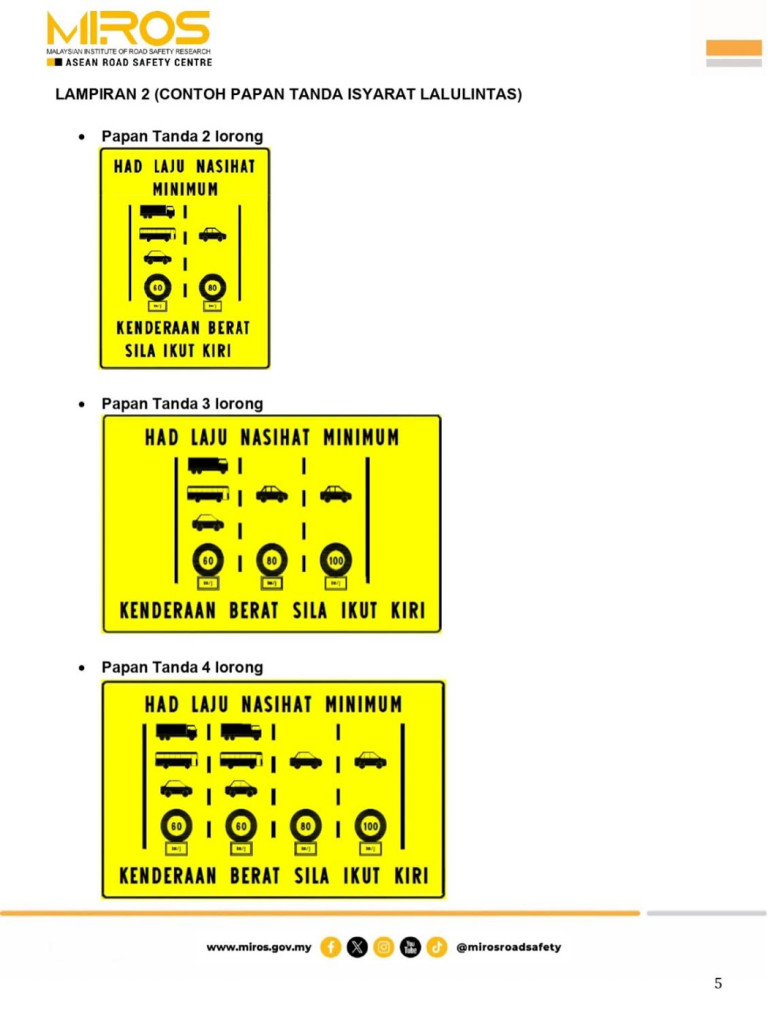
The advisory speeds vary depending on the number of lanes available on the highway.
Two-Lane Highways
- Right lane — 80 km/h
- Left lane — 60 km/h
Three-Lane Highways
- Right lane — 100 km/h
- Middle lane — 80 km/h
- Left lane — 60 km/h
Four-Lane Highways
- Right lane — 100 km/h
- Middle lane — 80 km/h
- Inner left lane — 60 km/h
- Left lane — 60 km/h
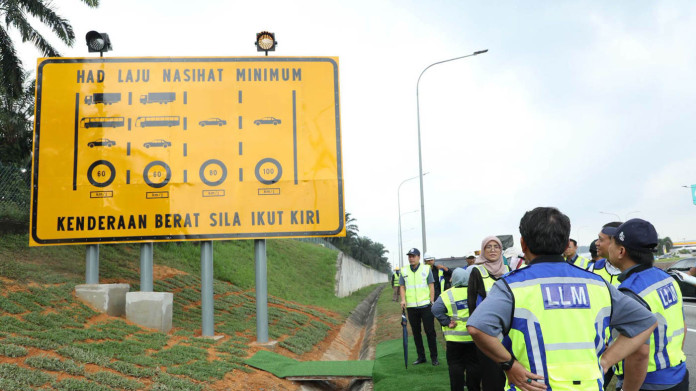
Motorists should refer to the advisory signboards installed along the participating highway sections for the appropriate recommended speeds.
The Advisory Is Not Mandatory
MIROS emphasises that the displayed speeds are recommendations only.
Drivers should always prioritise road conditions and safety over the advisory speeds. It is perfectly acceptable to travel below the recommended speed during situations such as:
- Heavy traffic congestion
- Heavy rain
- Poor visibility
- Road accidents
- Road maintenance
- Lane closures
- Instructions from police or highway personnel
The initiative is intended to improve lane discipline, not encourage motorists to drive faster than conditions safely allow.
Better Lane Discipline Benefits Everyone
Good lane discipline plays a significant role in creating a safer and more efficient highway environment.
Motorists are encouraged to:
- Use the lane that matches their travelling speed.
- Use the right lane mainly for overtaking.
- Return to the left lane after overtaking.
- Maintain a safe following distance.
- Give way to faster vehicles approaching from behind.
Although the advisory speeds themselves do not carry legal penalties, motorists should remember that unnecessarily obstructing traffic by remaining in the overtaking lane may still result in enforcement action under existing road traffic regulations.
Will The Trial Expand Nationwide?
Throughout the three-month trial, MIROS and its partners will monitor traffic behaviour and collect feedback to determine whether advisory minimum speed signage can effectively improve traffic flow and road safety.
If the findings prove successful, similar advisory systems could eventually be introduced on more Malaysian expressways.
For now, the trial serves as an important reminder that responsible highway driving is not just about staying below the maximum speed limit, it is also about using the correct lane to keep traffic moving safely and efficiently.