

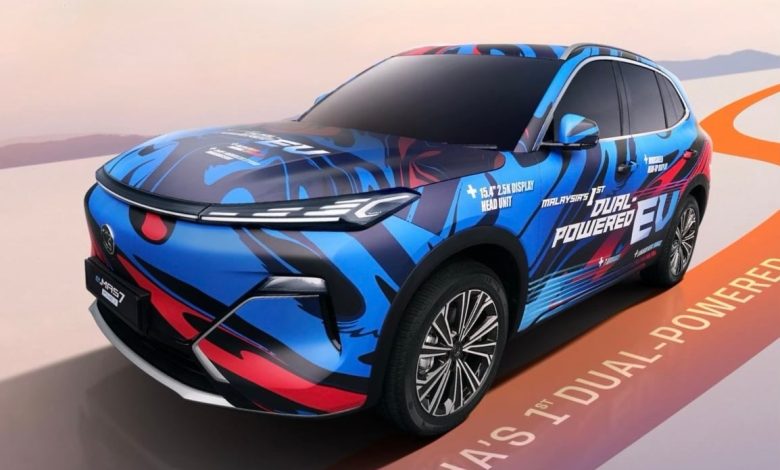
Proton is steadily pulling back the curtain on its electrification journey, and the eMAS 7 PHEV represents one of its most important steps yet. Ahead of its official launch, the national carmaker has revealed full specifications of its first-ever plug-in hybrid electric vehicle, positioning it as Malaysia’s first so-called “dual-powered EV”.
While the term itself may spark debate, there’s no denying that the eMAS 7 PHEV brings together a compelling mix of long electric-only driving range, extended total range, and familiar Proton practicality, all wrapped in a modern C-segment SUV package.
A Familiar Shape, With a Hybrid Twist
At first glance, the eMAS 7 PHEV closely mirrors the fully electric eMAS 7, and that’s no coincidence. Like its EV sibling, the PHEV is derived from a Geely model, in this case, the Geely Starray EM-i / Galaxy Starship 7, reworked and rebadged for Malaysia.
Dimensionally, the PHEV is slightly larger than the EV. It measures 4,740 mm long, 1,940 mm wide and 1,685 mm tall, riding on a 2,755 mm wheelbase. This makes it one of the bigger offerings in the C-segment SUV space, with interior space and luggage capacity to match.
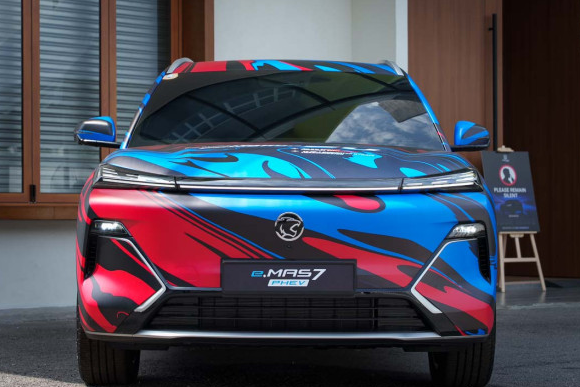
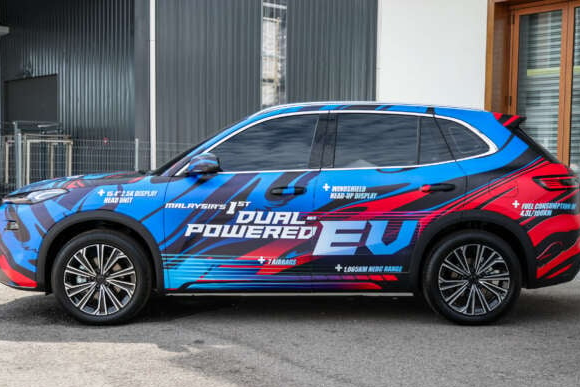
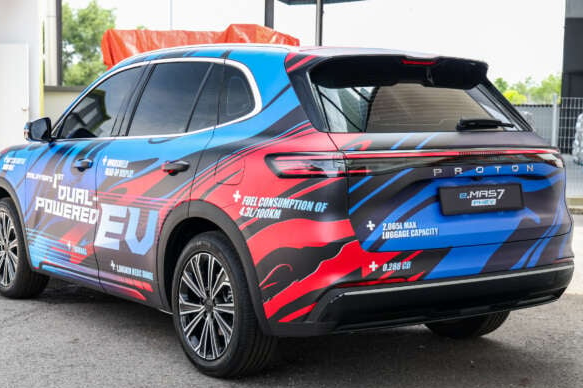
Despite still wearing camouflage during previews, Proton has confirmed several exterior differences that set the PHEV apart. These include a split headlamp layout with a full-width LED light bar, conventional door handles instead of flush units, redesigned bumpers, and a reworked tailgate that relocates the number plate from the bumper to the hatch. The result is a more conventional and arguably more mature appearance, without sacrificing aerodynamic efficiency, drag coefficient stands at a respectable 0.28 Cd.
Built on a Platform Designed for Electrification
Both the eMAS 7 EV and PHEV sit on Proton’s Global Modular Architecture (GMA), which was developed from the ground up with electrification in mind. For the PHEV specifically, Proton highlights extensive structural protection for both fuel and electrical systems, including multiple isolation pathways, reinforced protective beams, and 360-degree protection zones around the battery and fuel tank.
A stepped underbody design further reduces the risk of battery damage from scraping, addressing a common concern among electrified vehicle buyers in markets with varied road conditions.
Three Variants, One Hybrid Powertrain
The Proton eMAS 7 PHEV will be offered in three variants at launch: Prime, Premium and Premium Plus. All three share the same hybrid system, branded as Geely’s EM-i (E-Motive Intelligence) Super Hybrid.
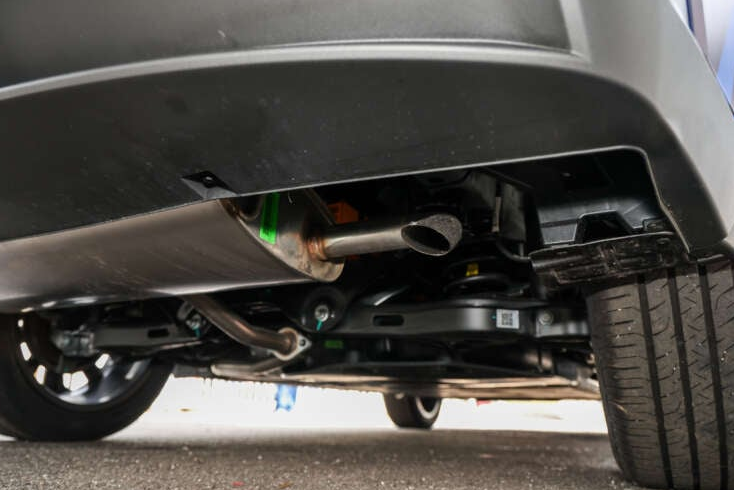
At its core is a 1.5-litre naturally aspirated four-cylinder petrol engine producing 99 hp and 125 Nm. While related to the engine found in the latest Proton Saga, this unit has been optimised for hybrid duty and is claimed to achieve up to 46.5% thermal efficiency, among the highest figures quoted for a mass-produced internal combustion engine.
The petrol engine works together with an integrated dedicated hybrid transmission (DHT), which houses an electric traction motor producing 218 hp and 262 Nm. Combined system output stands at 262 hp and 262 Nm, with power sent to the front wheels.
Performance figures are respectable rather than headline-grabbing: the Prime and Premium variants sprint from 0–100 km/h in 8.0 seconds, while the heavier Premium Plus completes the run in 8.2 seconds. Top speed is capped at 170 km/h across the board.
Two Battery Sizes, Nearly 1,000 km of Range
Where the eMAS 7 PHEV really differentiates itself is in its battery offerings. Proton is offering two LFP battery options depending on variant.
The Prime and Premium variants are equipped with an 18.4 kWh CATL-sourced LFP battery, providing up to 83 km of electric-only range on the WLTP cycle. Combined with the petrol engine, total driving range is rated at up to 943 km (WLTP).
At the top of the range, the Premium Plus features a much larger 29.8 kWh Aegis Short Blade LFP battery. This extends the EV-only range to 146 km and pushes the total combined range to an impressive 996 km on WLTP testing.
Fuel consumption figures, based on the NEDC cycle, are rated at 4.3 L/100 km for the Prime and Premium, and 4.4 L/100 km for the Premium Plus.
Fast Charging, Plus V2L and V2V
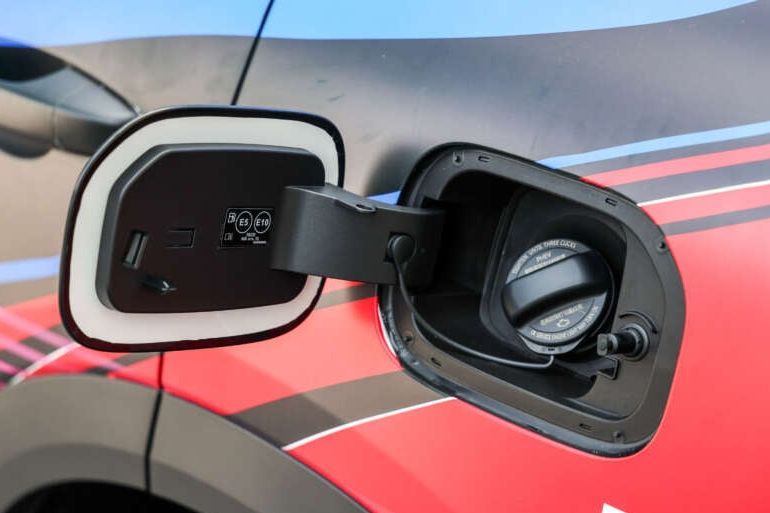
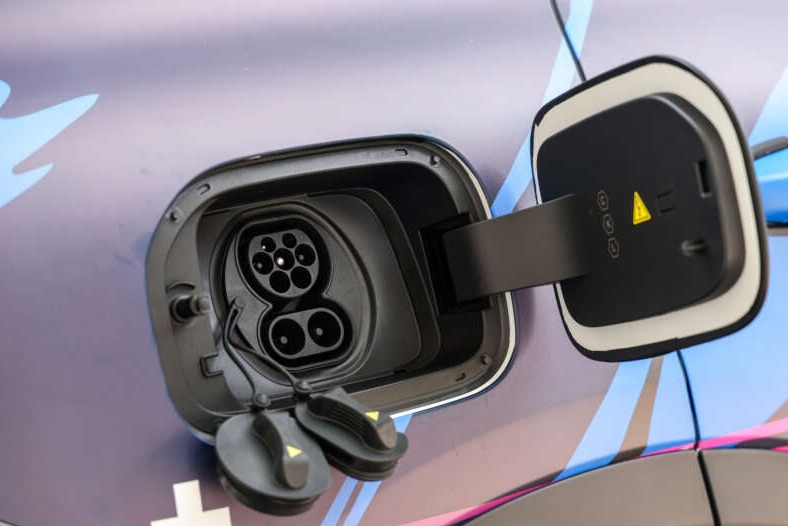
Charging capability is strong for a PHEV. The Prime and Premium variants support DC fast charging at up to 30 kW, allowing a 30–80% charge in under 20 minutes. The Premium Plus ups the ante with 60 kW DC charging, completing the same task in under 16 minutes.
All variants support 6.6 kW AC charging and come equipped with Vehicle-to-Load (V2L) and Vehicle-to-Vehicle (V2V) functionality, enabling the car to power external devices or even supply electricity to another compatible EV.
Interior: Familiar, But Well-Equipped
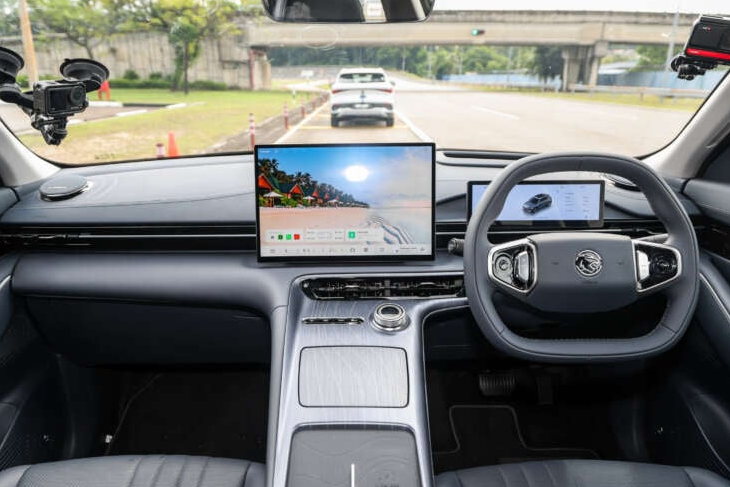
While Proton has yet to fully reveal the cabin design, confirmed details suggest the interior will closely mirror that of the eMAS 7 EV. This includes a 10.2-inch digital instrument cluster and a large 15.4-inch central touchscreen running Flyme Auto OS, with support for English and Malay, wireless Apple CarPlay and Android Auto, and over-the-air updates.
Standard equipment includes leatherette upholstery, a multifunction steering wheel, USB-A and USB-C ports, and a six-speaker sound system. Higher variants add a 13.8-inch head-up display, a 16-speaker Flyme Sound system, ventilated and power-adjustable front seats with memory, ambient lighting, a powered tailgate, and a 360-degree surround view camera.
Notably, the PHEV also gains a seventh airbag, a centre airbag between the front occupants, giving it a safety edge over the EV version.
Practicality Remains a Strong Point
Thanks to its hybrid layout, the eMAS 7 PHEV actually offers more boot space than the EV. Luggage capacity stands at 528 litres, expandable to 2,065 litres with the rear seats folded. There’s also 100 litres of hidden underfloor storage, making it a practical choice for family use.
What’s Next?
The Proton eMAS 7 PHEV will initially be offered as a fully imported (CBU) model, with local assembly planned at a later stage. Pricing has yet to be announced, but Proton has confirmed that bookings will open following an official livestream event scheduled for mid-January 2026.
With its long electric-only range, fast charging capability and comprehensive equipment list, the eMAS 7 PHEV looks set to play a key role in Proton’s electrification strategy, and could prove especially attractive to buyers who want the benefits of electrification without fully committing to an EV just yet.